
To grow a Steam game in 2026, treat Steam as your primary channel and work three pre-launch stages in order: Foundations (validate the genre and start capturing demand), Growth (test channels and messaging to scale wishlists), and Launch (use Steam Next Fest, pricing, and wishlist conversion to maximize Day 1 sales).
How to market a Steam game?
Game marketing is the discipline of communicating and delivering your game to players with the goal of generating a profit. There are a lot of ways to market a game, but if you're a PC game in 2026, a few constraints narrow the options.
First, unless you're partnered with a publisher (e.g. Epic Games), you'll most likely be launching on Steam. Valve accounts for ~75% of total PC game sales and early this year hit a new all-time high of 42+ million concurrent users. The 30% cut you pay Valve is the admission price for access to this market. This means:
- Steam is your primary channel.
- All other marketing strategies ultimately need to optimize your performance on Steam.
If you don't optimize for Steam, you get left behind. It's a winner-takes-most system: roughly two-thirds of games make under $1,000 lifetime profit, whereas the top 5,863 earned over $100,000 in 2025.
The 3 major stages
Although there are hundreds of important events leading up to launch, the games that outperform in D1–7 sales are those that laser-focus on certain objectives during certain periods. So this guide is set out in chronological order, split into three distinct stages, each defined by its primary goal:
- Foundations, validate the idea and build a demand-capture mechanism.
- Growth, find what works and scale it to acquire wishlists.
- Launch, maximize algorithmic discovery.
Stage 1: Foundations
Primary goal: validate the game idea and build a demand-capture mechanism.
Step 1: Genre-market fit
If you're reading this, odds are you're already well into development and major design choices have been made. Still, keep this in mind:
Marketing is an amplifier on the success of your game, rather than a replacement. It doesn't replace the need to build something players actually want.
Your goal at this stage is twofold: pick a target market with enough demand, and make a fun game.
Target market demand
To succeed on Steam, you need a genre with enough demand. Judge it on three things:
- Total addressable market (TAM), the most copies your type of game could sell. Estimate it with a third-party tool (e.g. Game Stats) by looking at the estimated total revenue for each genre and tag. Even an amazing game can't sell many copies if only a handful of sales happened in your subgenre last year.
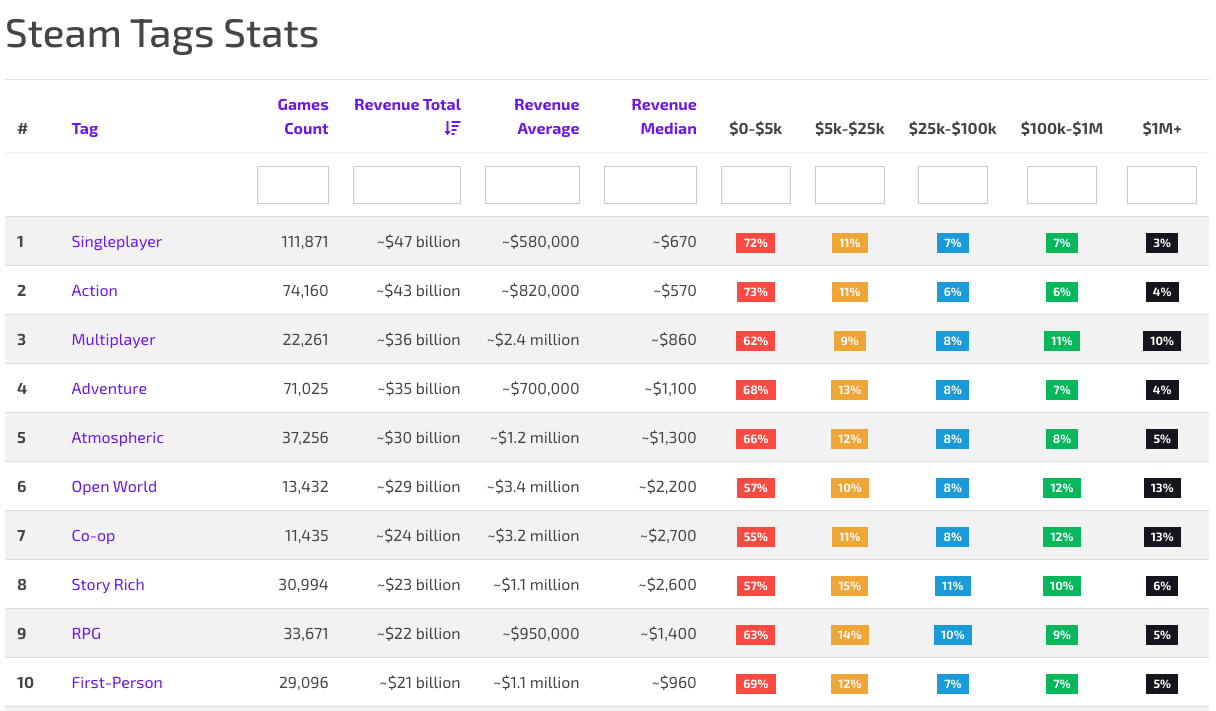
- Competition intensity, using the same page, look at the games count to see how many other games compete for that revenue. Then check median revenue, average revenue, and revenue by percentage if available. Even a high-TAM genre is risky if all the revenue concentrates in a few outliers.
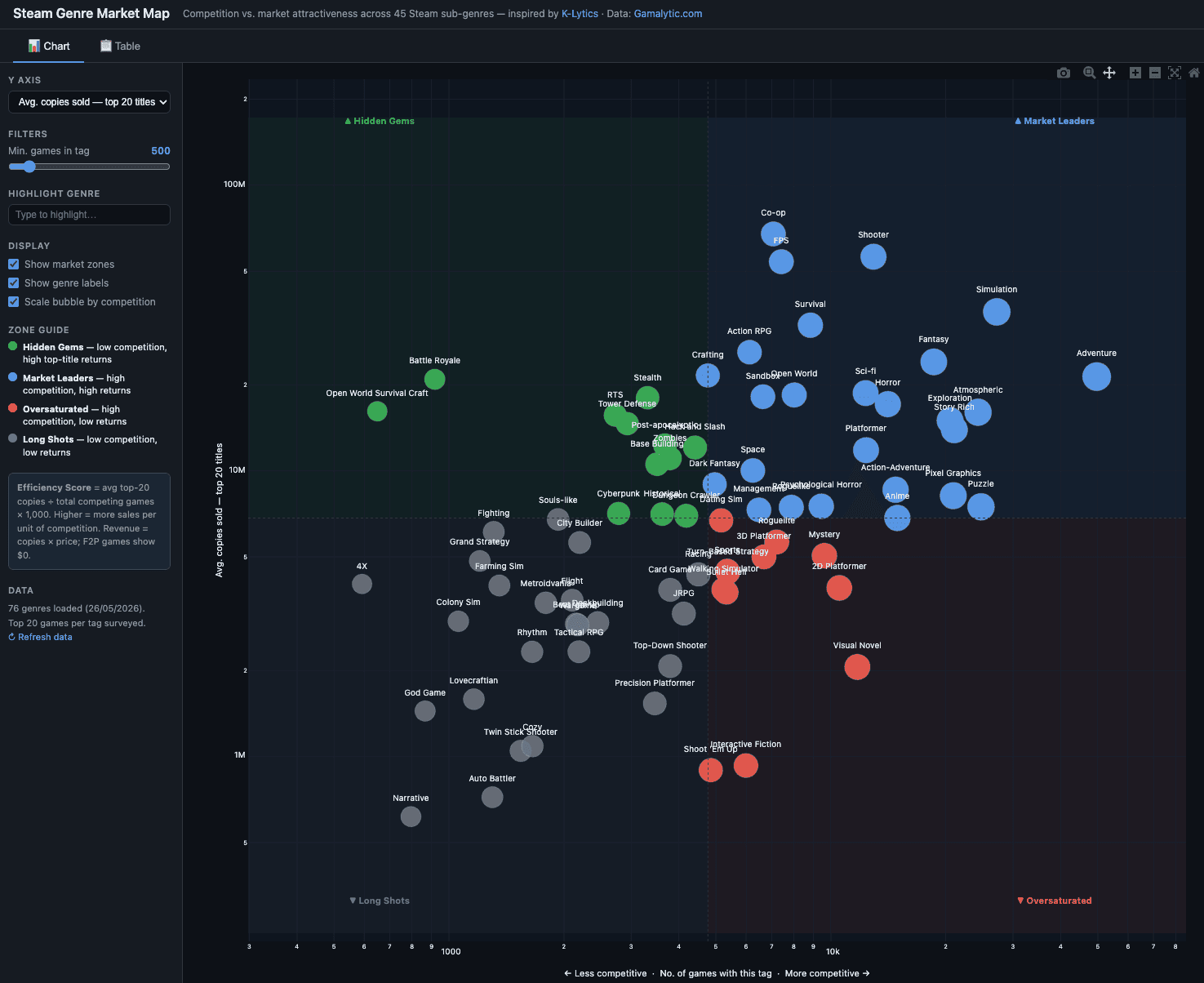
- Comp-title performance, on SteamDB, find the 5–10 closest comparable titles. For launched games, look at estimated total players; for pre-launch games, look at total follows (Steam doesn't make wishlist data public, but an industry rule of thumb is a game has roughly 9.6x as many wishlists as follows).
Pro tip
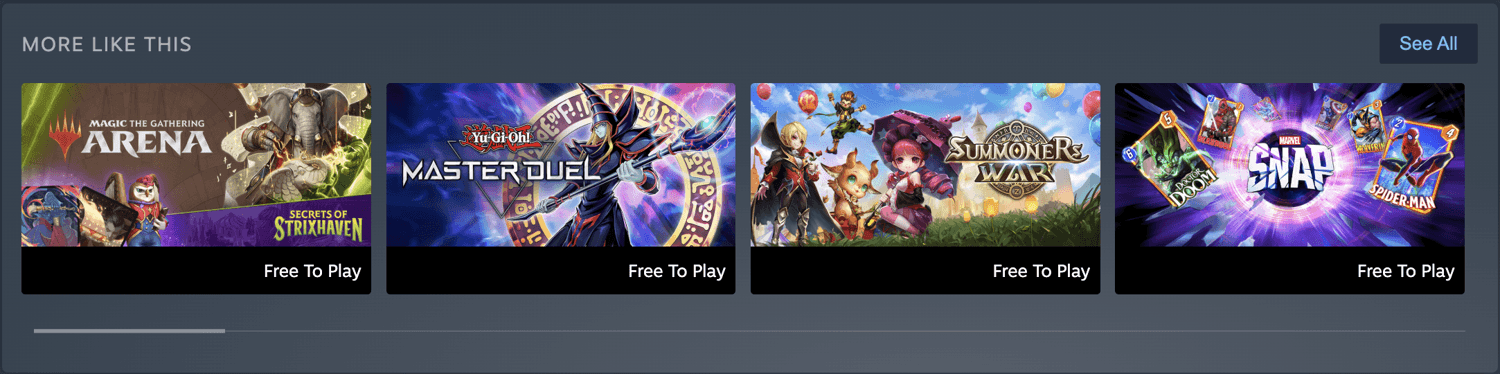
To curate a comp-title list, start with just one game, open its Steam page, and scroll to the "More Like This" carousel at the bottom.
Game design
Once you've chosen your genre, decide on the core gameplay loop and features. These should be designed to be loved by your target player, the type of person who will enjoy and pay for your game. To keep it simple, assume your target player shares the traits of people who enjoyed your game's:
- Genre, a category of games sharing similar subject matter, form, and style.
- Comp titles, other games with similar gameplay experiences.
Game design is its own topic, but a simple way to validate is to study successful comp titles (and their reviews) to understand how they succeeded at: aesthetics, high-level concept, co-op experiences, depth of content, and specific genre-related emotions.
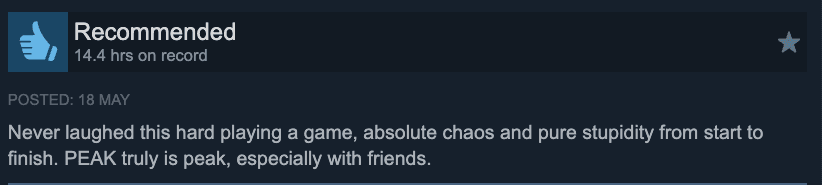
Also note what those games were not good at, it may signal which elements your audience cares about most (a horror game needs to be scary; funny co-op moments matter less).
Step 2: Coming Soon page
Once you have the basic premise and genre, launch your Coming Soon page on Steam ASAP. Pre-launch, time is your friend: the longer you have to grow wishlists, the more the algorithm favors you, and the more chances you get to experiment. Launch once you have a minimum viable page:
- Game title
- Genre tags
- Capsule art
- Trailer
- Screenshots / GIFs
- Description
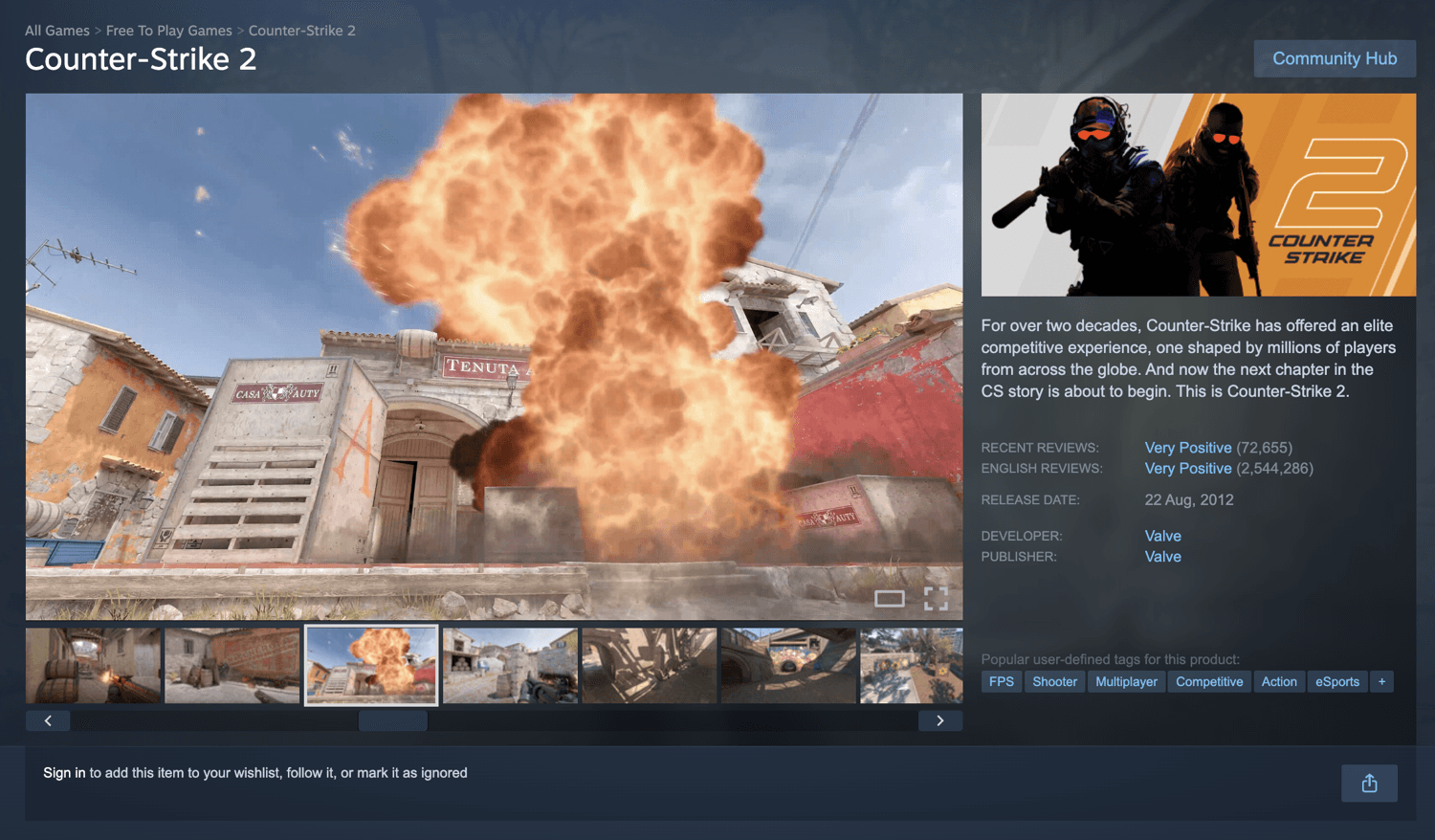
For all creative assets, the ultimate goals are the same. We want to increase:
| Goal | Explanation |
|---|---|
| Discovery | Your game gets pushed to the right players by the algorithm. |
| Conversion | Players convert at a high percentage at each funnel stage, from first seeing your capsule down to clicking the wishlist button. |
Three strategies for achieving this:
- Similarity, signal you're the kind of game your target audience likes, by resembling comp titles and your genre.
- Difference, signal you're unique enough from games they've played that you're worth trying.
- Quality, whatever features you identified as important in Step 1, make your assets communicate a high level of quality there.
Key concept: funnel leverage
The father of advertising, David Ogilvy, once said: "On the average, five times as many people read the headline as read the body copy. When you have written your headline, you have spent eighty cents out of your dollar." In other words:
The earlier a player sees something, the more effect it has on the funnel's overall success, and the more effort we should put into getting it right.
Your capsule art is arguably the most important element of your Steam page: it's the first thing people see and it decides whether they click to see everything else. We built a free Steam Capsule Analyzer to help you check whether yours is ready.
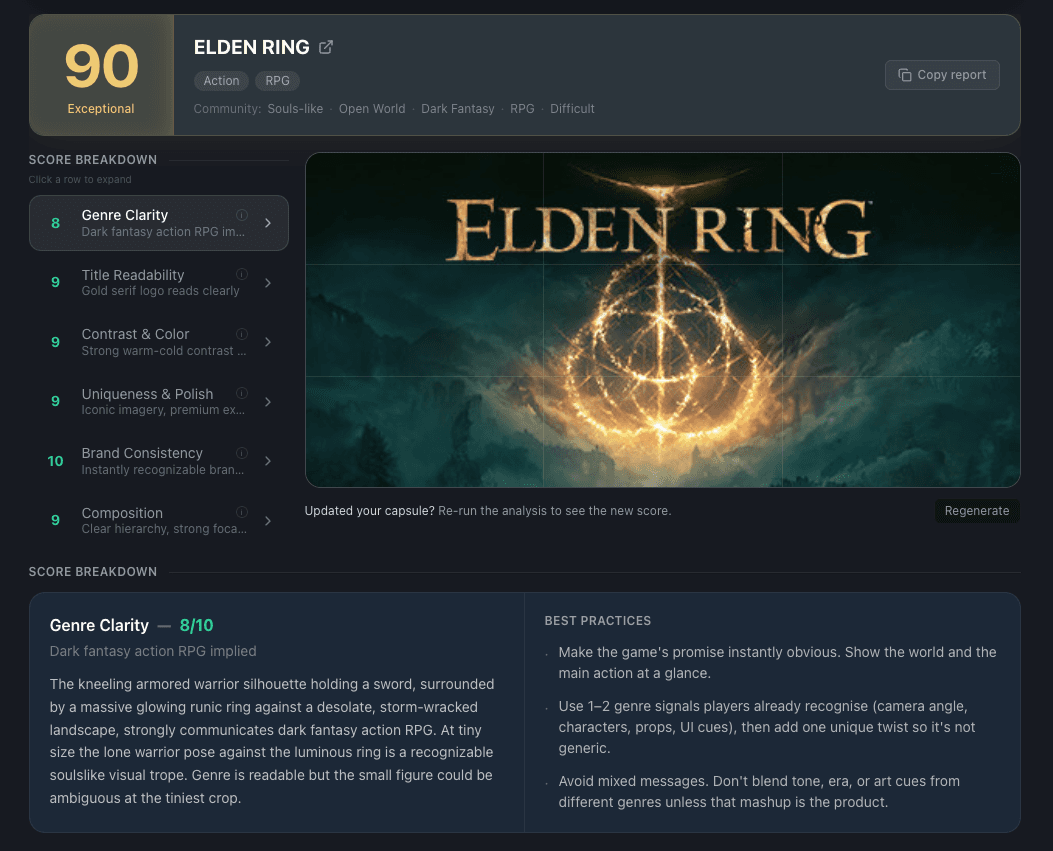
Don't delay your Coming Soon page trying to make it perfect, perfect is the enemy of good, and you haven't had enough traffic yet to know what converts. You can change most assets up until launch, so the in-depth optimisation section is later in this guide.
Step 3: Set up tracking (attribution)
Before bringing in traffic, you need a way to tell which wishlists came from where, otherwise you can't know which strategies are working. Attribution is how advertisers determine which marketing activities (ads, streamer campaigns, demos) are responsible for which user actions (engagement, wishlists, purchases). Put simply: which channels are creating real demand, and which are just creating noise?
On Steam, the native method is UTM links, tracking codes added to URLs that identify the source, medium, and campaign that drove a visit (e.g. utm_source=reddit&utm_medium=organic). Attribution and incrementality testing are complex; here's the simplified setup:
Steam UTM setup
- Steamworks UTM Analytics, in Steamworks, open Marketing & Visibility → UTM Analytics and add UTM parameters to your app or sale page URL.
- Create a UTM per channel, make a separate link for each traffic source using Steam's form, e.g.
https://store.steampowered.com/app/YOUR_APP_ID?utm_source=tiktok&utm_campaign=next_fest&utm_medium=paid. Name them:utm_source= platform/partner (tiktok, youtube, creatorname),utm_medium= channel type (paid, organic, influencer),utm_campaign= the campaign (next_fest_demo, launch_trailer). - Test the link in Steamworks, use the "Test a UTM Link" button to confirm the URL is valid before publishing.
- Track results in the UTM dashboard, review visits, trusted visits, tracked visits, wishlists, purchases, and activations. Visit counts update hourly; conversions finalise after ~4 days.
Unfortunately, even after all this, Steam attribution is imperfect. Many channels are hard to track, and if a player interacts with more than one (a TikTok on mobile, a desktop search later), it's hard to assign credit. You can see top-of-funnel impressions and watch wishlists rise, but often can't tell which channel caused what.
Improving attribution
Steam wishlists and pre-registrations are a black box, players are largely anonymous, so games have no idea what those players did on other channels. One way to solve this is a customer data platform (CDP) like Immutable Audience.
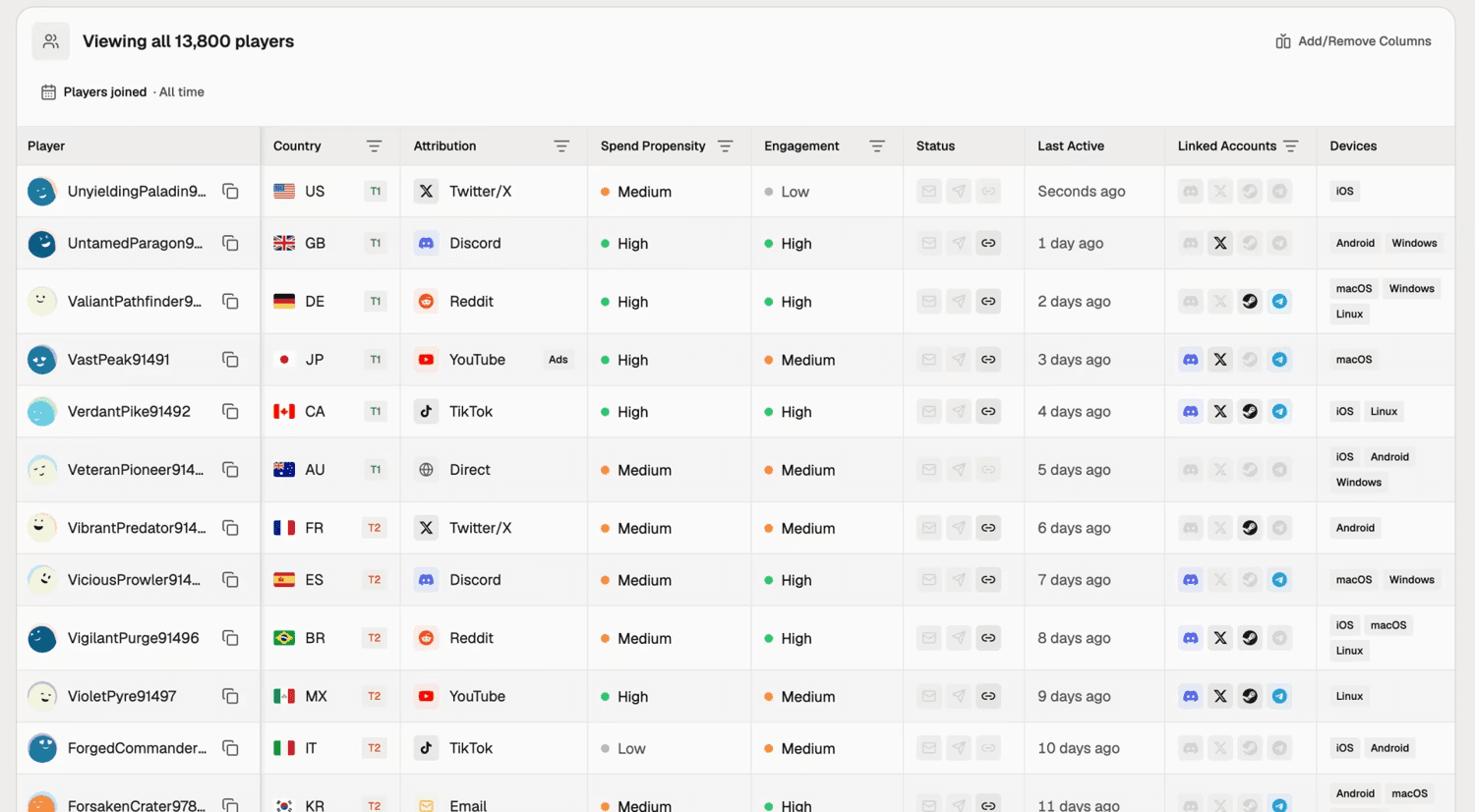
In simple terms:
- Immutable Audience is an extra layer that collects a game's fragmented player data into one place.
- Players go from an anonymous number to a person you understand: what they respond to, and how similar players will likely respond.
- This clarity is a multiplier on all the testing you'll do in Stage 2.
A lot of marketing is stumbling around in the dark until you find what works. Using a CDP is like wearing night-vision goggles while everyone else is blind. (More on the data behind this in Immutable Attribution.)
Stage 2: Growth
Primary goal: find what works in your channels and scale it to acquire wishlists.
Once you have a surface for players to wishlist, send as many people there as possible, primarily by experimenting with your channel and your message.
Marketing theory: the 4 P's
McCarthy's Marketing Mix says a marketer can influence the target customer through four levers: Product (what you sell and its features, the game design from Step 1), Price (covered later), Place (where it's available, Steam, plus any other stores), and Promotion (how value is communicated, the focus now: the channels you use and the message you send in them).
Step 4: Find your first working channel
A channel is any medium you use to communicate with and/or distribute to a customer. This could be anything (ever seen ads in skywriting?), but in practice some channels reliably work best for games.
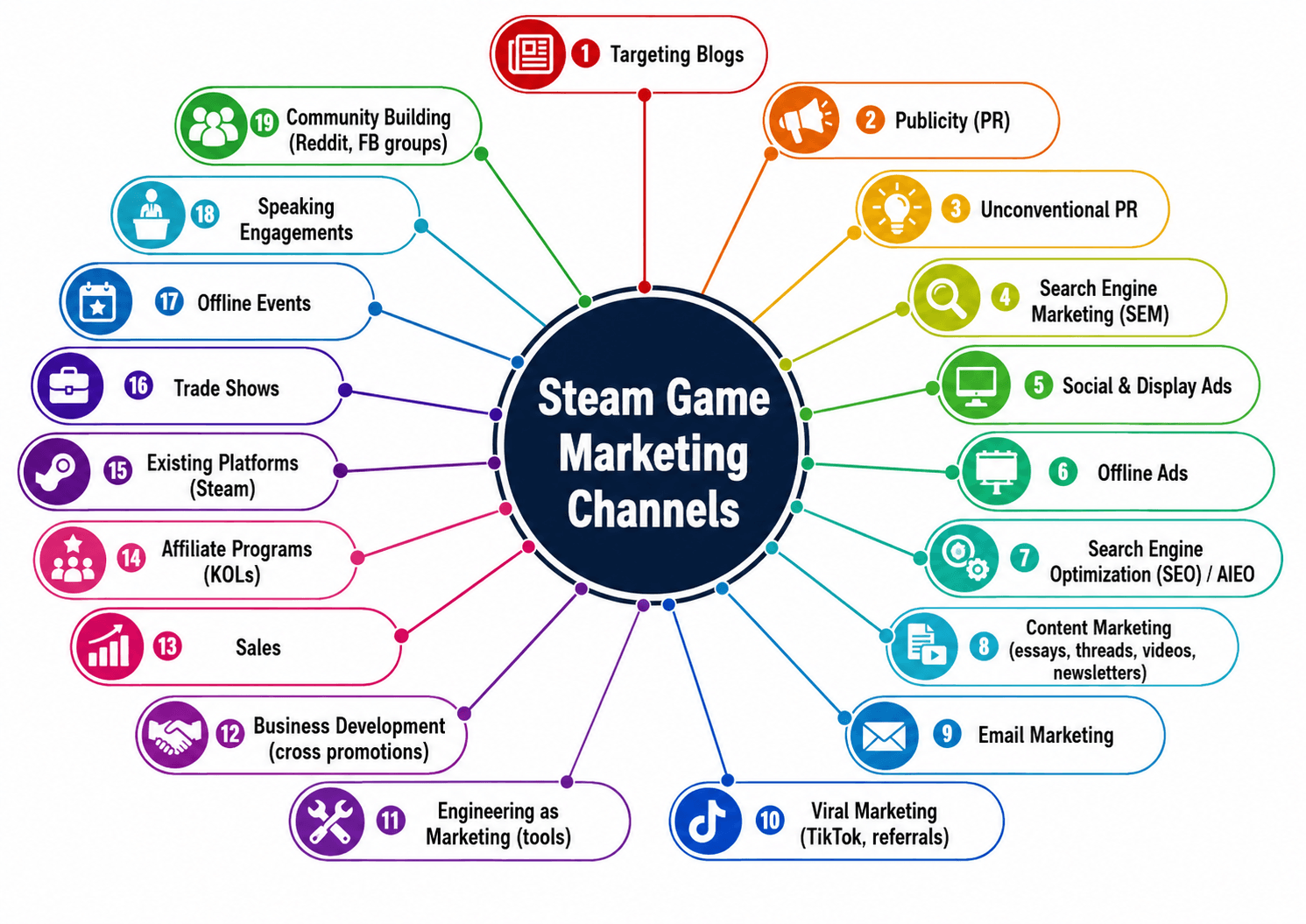
Evaluating channels
The four main criteria for picking a channel:
- Game-channel fit, do your game's traits make it easy to get lots of reach there?
- Audience-channel fit, are your target players easily contactable through it?
- Scalability, prefer channels where contacting many players costs the same effort as contacting one.
- Efficiency, usually the cheapest cost per player.
It boils down to: where can you get the most wishlists most efficiently?
Channel choice
Note: most channels work for most games, this is just what tends to outperform.
| Channel | How it works | Best for | Best game types | Requirements |
|---|---|---|---|---|
| Festivals | Steam/native events drive concentrated traffic spikes | Wishlist spikes + Steam proof | Strategy, sim, roguelike, RPG | Strong demo |
| Streamers / affiliates | Creators expose the game to aligned audiences | Trust + high-intent traffic | Horror, co-op, sandbox, emergent systems | Strong demo |
| Short form | Clips distributed algorithmically (TikTok, Shorts, Reels) | Cheap hook testing + broad reach | Funny, visual, high-concept, co-op | Instantly legible concept |
| Community | Build direct relationships (Discord, Reddit, forums, devlogs) | Retention + launch activation | Deep / niche games | Consistent interaction |
| Owned media | Capture a direct audience outside algorithms (email, CRM, blog) | Conversion + repeat launches | Most games, the bottom layer of every funnel | Capture infrastructure |
| Press | Earn editorial coverage and credibility | Credibility + awareness | Visually novel / newsworthy games | Clear news hook |
| Paid | Buy targeted attention (Meta, TikTok, YouTube, Reddit ads) | Scaling proven hooks | Games with proven CTR/CVR | Budget + attribution |
Which fits depends on the features players find valuable. Examples: "friend-slop" games do well in short form (a funny co-op moment friends share); highly aesthetic games work on visual social channels (people upvote and bookmark); complex mechanics work best at festivals, where the value is best shown by playing a demo.
Key insight: power laws
The players you get from each channel follow a power-law distribution: one will likely account for over 80%, while all the rest contribute the last 20%. Put most of your effort into the channel that works best, but most games still need to stack many small wins from different places to build the momentum they need.
Step 5: Test your message
The message is how you articulate the game's core value to your target player in a quick snapshot, an elevator pitch you'd give in 7 seconds. Because aesthetics matter to players, use a visual medium.
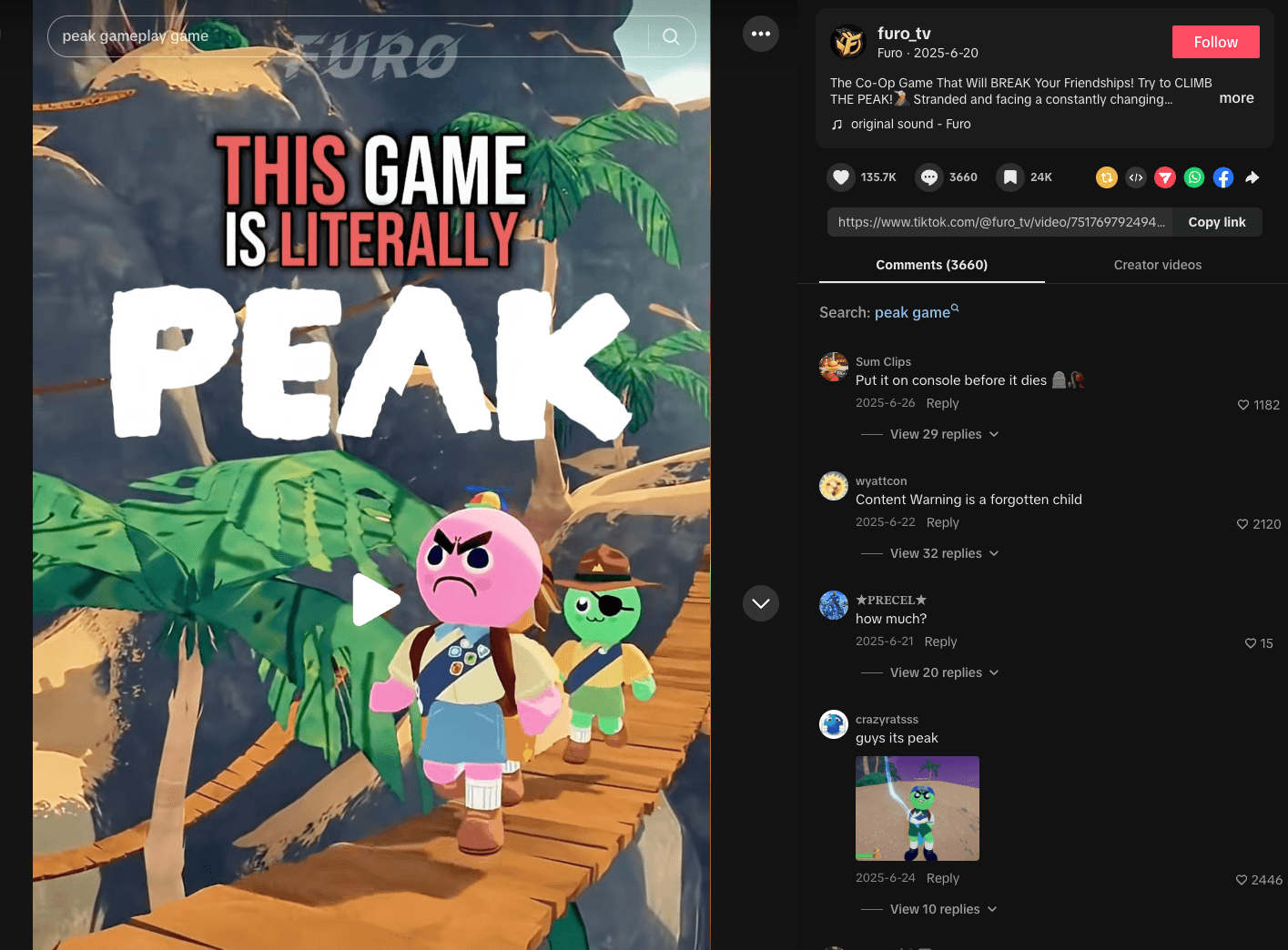
Bundle together:
- Hook, the sentence or two that encapsulates the game.
- Creative, the static or video asset that accompanies it.
As with other assets, think about what your target player enjoys, what worked in your most successful comp titles' winning angles, and how you'll differentiate quickly.
How to tell what's working: funnels
A channel funnel is the measurable step-by-step path a user takes inside a channel toward buying your game. Most Steam channel funnels look like this:
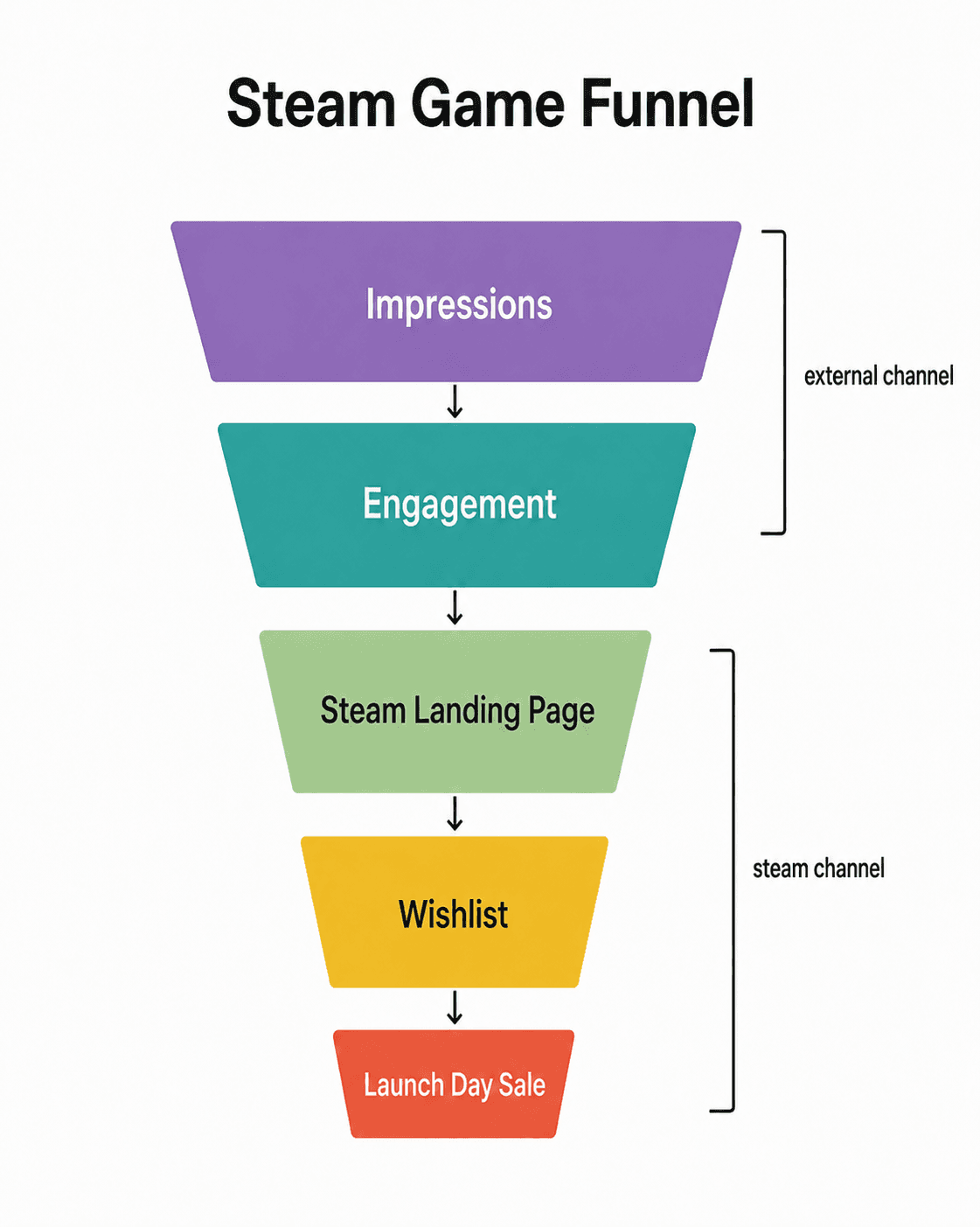
At each stage, track:
- Volume, the absolute number of people who performed an action.
- Conversion, the percentage who moved to the next stage.
Example
A TikTok gets 1,000,000 impressions. 50,000 click the caption link to Steam (5% conversion). 10,000 wishlist (20% conversion). The ultimate goal is wishlists, so in the unlikely event a message got fewer impressions but more wishlists, it performed better overall.
How to run experiments
Don't blindly post assets, get the most efficient outcome (wishlists) for your resources (time and money) by gathering evidence empirically:
- Form a hypothesis about what attributes will drive key metrics.
- Post a message designed to prove or disprove it.
- Analyze the performance.
- Iterate, and repeat the cycle.
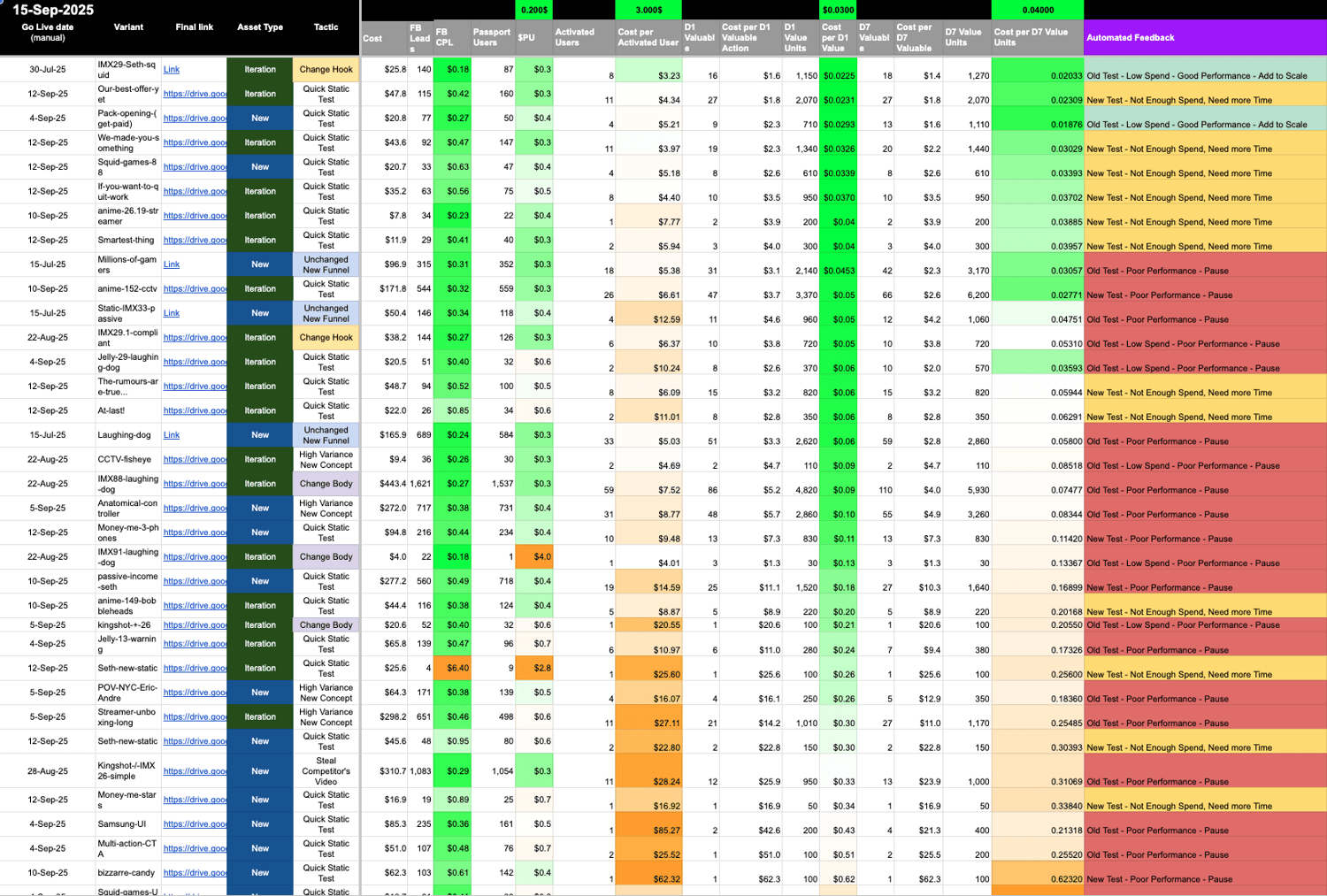
Every message you put out gives you feedback and a chance to improve, so the more lead time before launch, the more chances to nail it.
Key insight: the 70/20/10 rule
- 70% of marketing should double down on what already works best.
- 20% should scale new / adjacent angles.
- 10% should be wild experimental bets.
Step 6: Launch your demo
As with your Coming Soon page, launch your demo sooner rather than later, but here, quality matters more from the start. A demo is a small, free, playable slice players can try before launch. Its primary goal is proof-of-fun in any channel where someone will play it. Balance:
- Quality, a buggy, incomplete demo can harm your reputation more than help. Update it on feedback, but first impressions matter.
- Earliness, the sooner it's live, the more total coverage from streamers and festivals (especially important if your value comes from deep gameplay rather than clippable moments).
Staggered reach-outs
The staggered reach-out sends your demo to a portion of the channels you want featuring it, updates for feedback, then reaches more, higher-priority channels. To do it:
- List every 3rd party you might want to feature your game, streamers, social influencers, festivals. (As always, look at comp titles: where have they been featured?)
- Tag each on three criteria: reach (how many will see it), fit (brand/past-games alignment), and competitiveness (how hard to get featured).
- Segment into 3 tiers: A (best fit/reach, or highly competitive), B (decent, or less competitive), C (weaker fit, easy to get into).
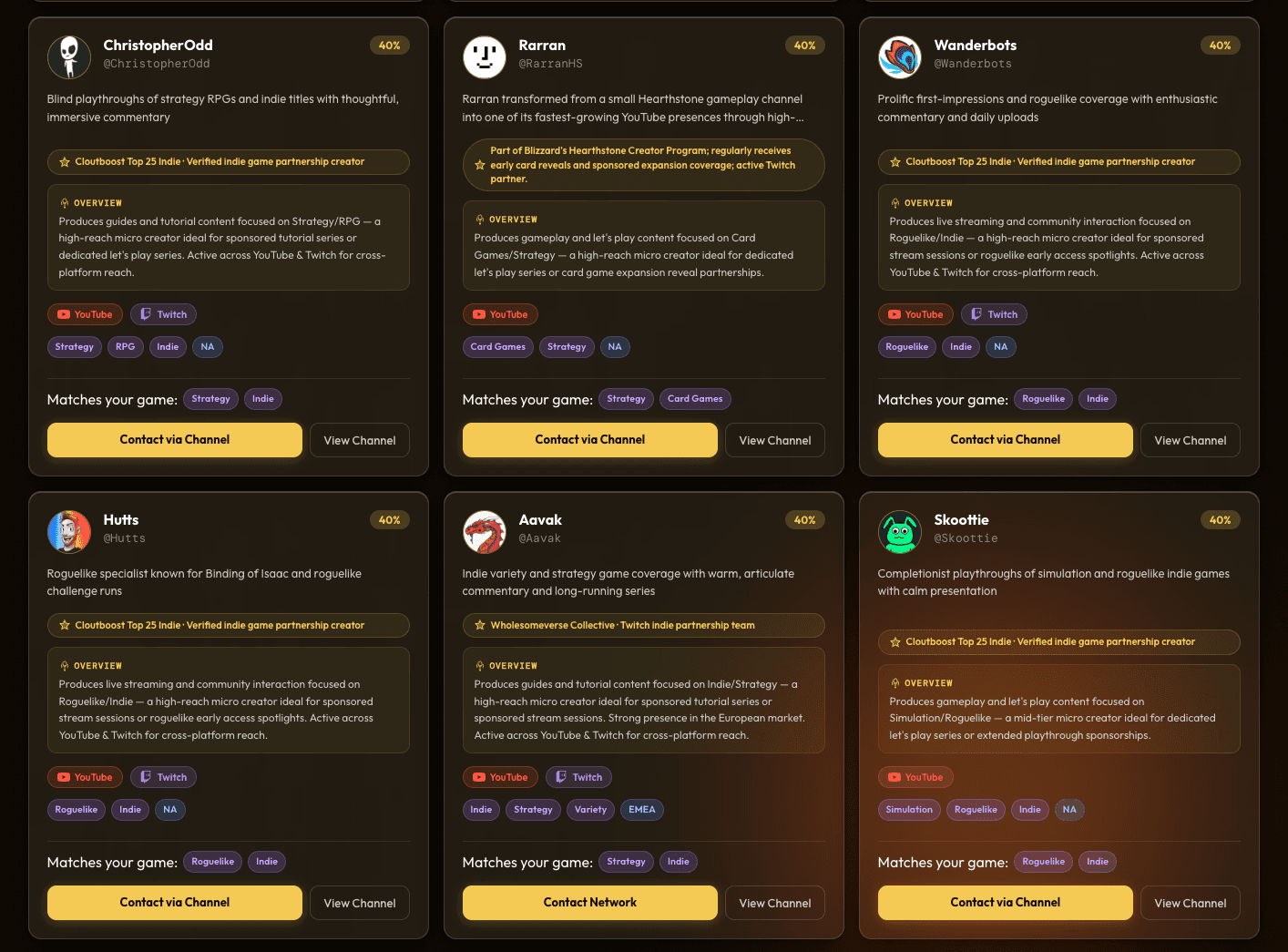
- Reach out in mixed tranches, start mostly with C's plus a few B's and A's.
Why mixed tranches?
We want to maximize our chances of getting featured and how beneficial each feature is. The biggest streamer is hard to land. You'll need your best demo and existing hype, much of it from smaller streamers. And it's easier to land smaller streamers once a bigger one has featured you. Applying to all the C's, then all the B's, loses the chance to speed this up.
- Update for feedback, after the first group features you, improve on what people did and didn't enjoy.
- Trade up, with a better demo and social proof, repeat with more B's and A's.
- Repeat, more feedback and proof, do it again.
How many per tranche? Depends on your time and capacity. Rule of thumb: reach out to several hundred streamers / festivals in total (only a small percentage accept), across at least 3 tranches so you get substantive feedback.
What if an A-tier festival comes too early? Most festivals come once a year, so it's usually better to get in even if your demo isn't updated yet. The exception is Steam Next Fest, you can only be featured once, so wait until the last possible cohort before launch.
Stage 3: Launch
Primary goal: maximize algorithmic discovery for launch.
Step 7: Steam Next Fest
Steam Next Fest (SNF) is a Steam event where players browse and wishlist unreleased games, play demos, and watch developer livestreams.
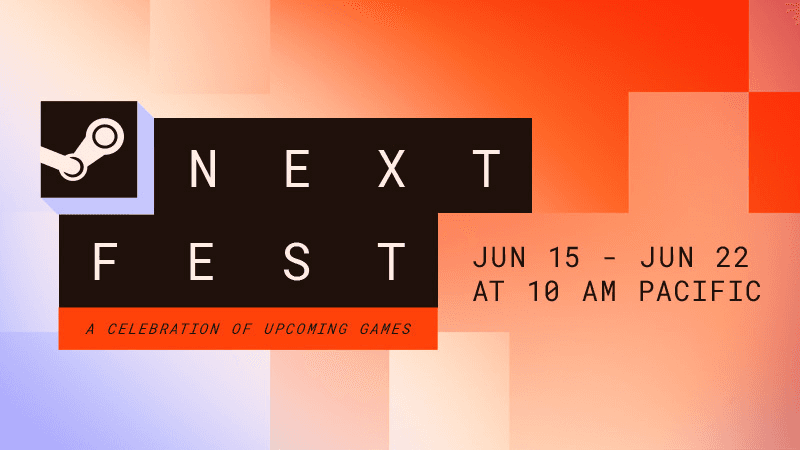
Unlike most channels, you can only appear in SNF once, so apply only to the festival closest to launch and treat it as your final sprint.
Steam Next Fest, key info
- You may only apply once.
- SNF runs three times a year: February, June, October.
- Eligibility: your game is pre-launch and has a demo playable by the festival.
- The primary benefit is algorithmic, qualifying games appear in the SNF discovery feed, genre browsing, and personalised recommendations. For the right studio it can be the largest wishlist spike in the pre-launch calendar.
Most games are not ready
The reality is most games that apply to SNF aren't ready. Using machine learning, we ran a predictive ranking analysis on 3,000+ games across four Steam Next Fests and found the two biggest predictors of success were total wishlists and recent wishlist growth rate.
The key takeaway: Steam Next Fest is a multiplier on your current wishlist momentum, not a replacement. Go in without a strong baseline and you won't get much out of it.
You can withdraw any time before the start date. Rank your readiness across each signal:
| Signal | Green | Yellow | Red |
|---|---|---|---|
| Demo stability | Completable in one sitting, no crashes | Minor bugs, one or two soft locks | Crashes, cannot be completed |
| Store page | Capsule converts, trailer explains the game quickly | Capsule unclear, trailer slow | Capsule is a logo, trailer is a cinematic with no gameplay |
| Wishlist baseline | 1,000+ wishlists | 500–999 | Under 500 |
| Daily wishlist velocity | 10+ organic wishlists/day | 5–9/day | Under 5/day |
| Creator pipeline | Relevant creators identified and contacted | List exists, no coverage likely | No list |
| Capacity to run the event | Someone free to respond and patch during the festival | Part-time availability | No one available |
| Readiness to launch | Can launch ~1 month around SNF | Must launch immediately after SNF, or >2 months later | Not launching for 3+ months |
All green: enrol in the next festival and execute. Mostly yellow: enter, but treat it as a learning event, collect feedback, test your store page, find creator fit, build a stronger plan. Any red: genuinely consider withdrawing for a later SNF. Studios entering with sub-500 wishlists and an unstable demo often finish with only a few hundred new wishlists and negative public feedback, and that outcome follows the game.
How to "win" at SNF
The main goal of SNF is to multiply your existing wishlists. There are a few ways, in chronological order:
1. Festival trailer
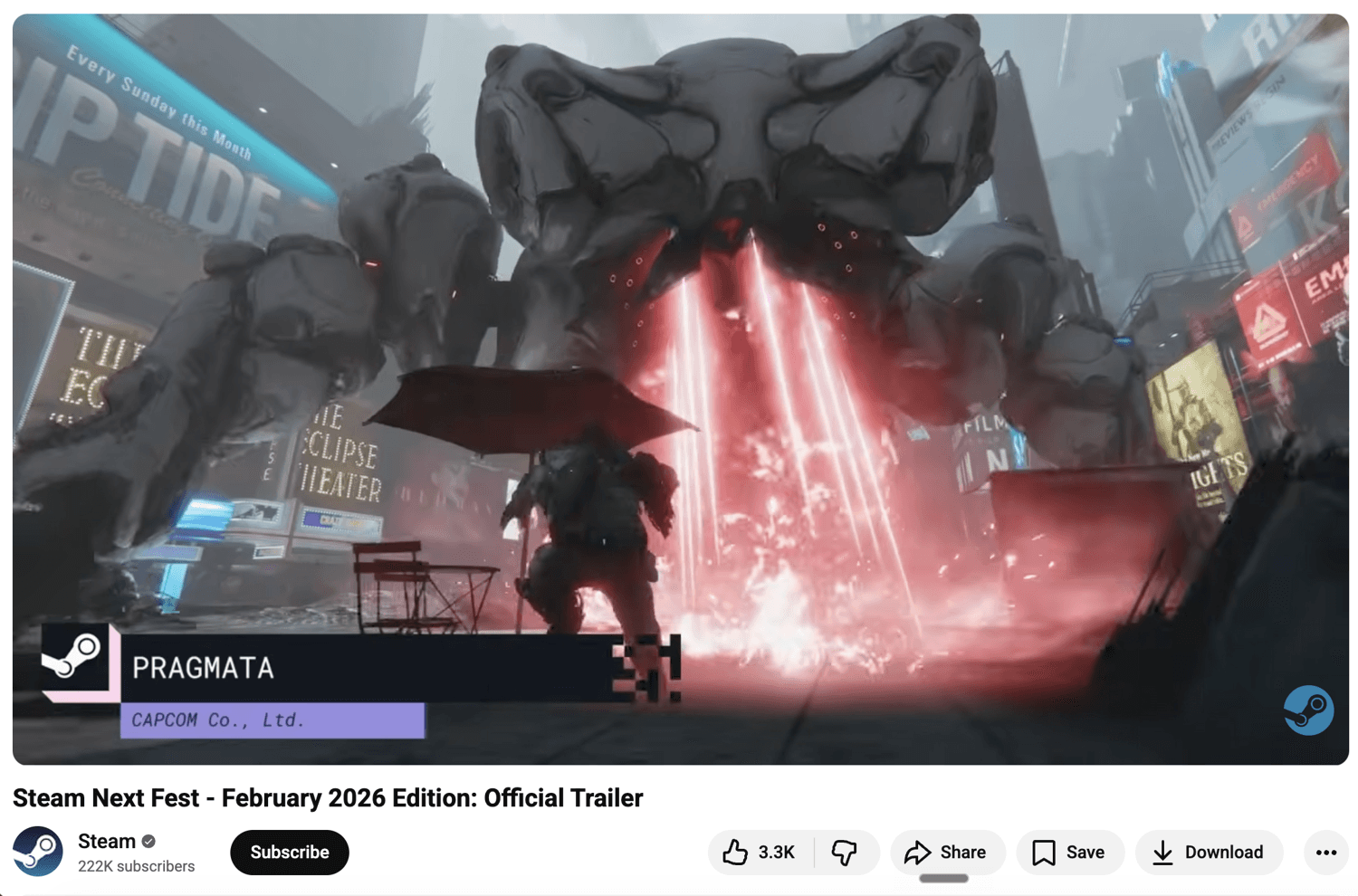
Ahead of the festival, Valve curates 20–30 games into a trailer it shares widely. Treat it as a "nice to have" rather than crucial, the wishlist impact is hard to prove and <1% of games make it in. To improve your odds: register early, have a high-quality trailer, and showcase your most unique or aesthetic gameplay.
2. Press preview
Press Preview is a sneak peek Valve sends to ~100 press outlets before the festival. To benefit: opt in, make sure your demo is playable, and optimize your creative as you would for other channels.
3. Organic discovery
During the festival, Steam shows your game on the Next Fest event page and in carousels. This is where most SNF wishlists come from for most games. Once it goes live:
- First 48 hrs, every game has a baseline chance of being randomly shown on the main page; genre carousels are customized to each viewer's taste.
- After 48 hrs, a machine-learning algorithm increases visibility for games performing well (and reduces it for those that aren't). Per Valve, it promotes games being wishlisted to people with similar taste to whoever originally wishlisted them.
Example
Player 1 likes games A, B, and C and wishlists game D. Player 2 also likes A, B, and C, so the Next Fest algorithm recommends game D to them in a more visible spot.
4. Top Demos
Steam publishes a Top Demos page showcasing the 50 games with the most unique players during the festival. Fewer than 1% make it, and unlike the trailer, the rankings show each game's capsule prominently. These are considered the "winners" of SNF, and while measured by unique players, festival visibility is driven by wishlists, so reaching Top Demos is an excellent outcome.
Practical takeaways
- Tag correctly, your game shows to players based on your tags and the 1–2 primary genres Valve requires. Make them accurate so you reach your target player.
- Go in with wishlists, SNF multiplies your existing wishlists; the more you bring, the more you gain.
- Increase wishlist momentum, the algorithm rewards large increases before SNF and during the first 48 hours.
Case study
In our analysis, Phantom Blade Zero went into its cohort with 1.1M wishlists and ranked 61st, while smaller games starting with 15K–40K wishlists made the top 10, because they had stronger momentum going in.
Step 8: Pricing strategy
The goal isn't to charge the highest price you can get away with. It's to maximize your game's total lifetime profit.
Price elasticity
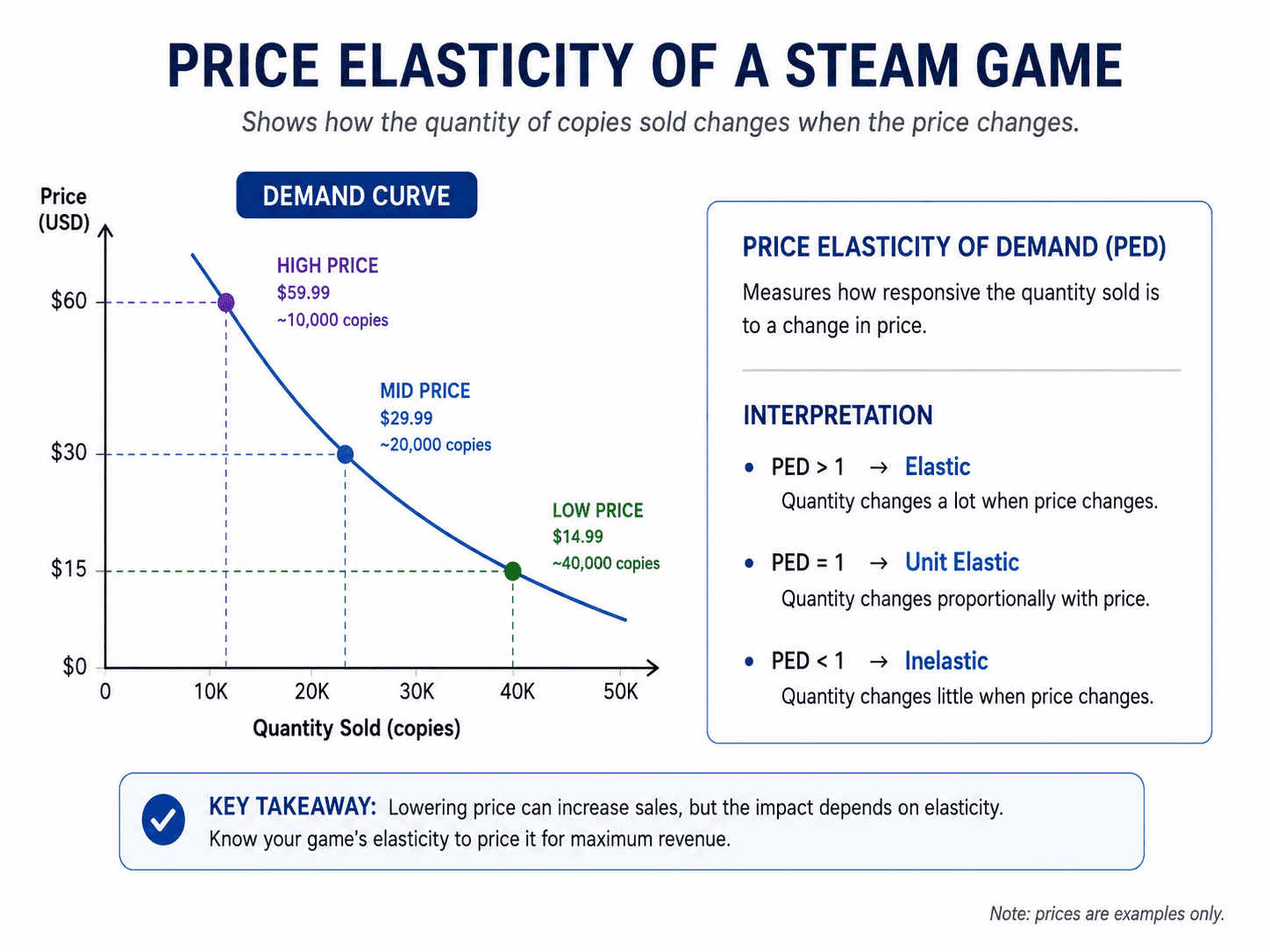
Due to massive supply, Steam games are relatively price elastic, small price changes can move conversion and units sold a lot. When price increases, you make more per sale but fewer buy; when it decreases, you make less per sale but more buy.
Willingness to pay
Your ideal price is anchored by your target player's willingness to pay, what they feel is reasonable for a game like yours. This is set against their internal reference price: what they expect similar games to cost, shaped by game length and replayability, depth and complexity, production quality, comparable titles, and genre price expectations (average prices on Gamalytic). A quick estimate: take the median price of 5–10 close comps and adjust if your game is meaningfully shorter, deeper, more polished, or more niche.
Pricing at launch
Early sales are disproportionately valuable, they boost you in the Steam algorithm. For many games this makes a launch discount attractive: more sales even at lower per-unit profit. Valve generally suggests a 10–15% launch discount. Discounts of 20%+ can trigger wishlist notifications, but that's a separate tradeoff: more urgency and visibility, less revenue per sale.
Step 9: Optimize conversion
On launch day, Steam can notify wishlisters, but not every player will receive or act on that notification. Delivery depends on verified email, user preferences, cooldowns, and Steam's notification rules. All your Stage 2 work pays off here, converting wishlisters into paying players.
Example
A game with 100,000 wishlists converting at 5% gets 5,000 sales. A game with half as many wishlists (50,000) converting at 10% gets the same. A 2x lift seems wishful, but with the right strategies it's reasonable, some games we've worked with increased launch-day conversion by 2.8x.
Landing page tests
Optimize the minimum viable page from Step 1 using Steam's Store & Steam Platform Traffic Breakdown. As with external messaging: hypothesise, update an asset to test it, analyze, iterate, repeat.
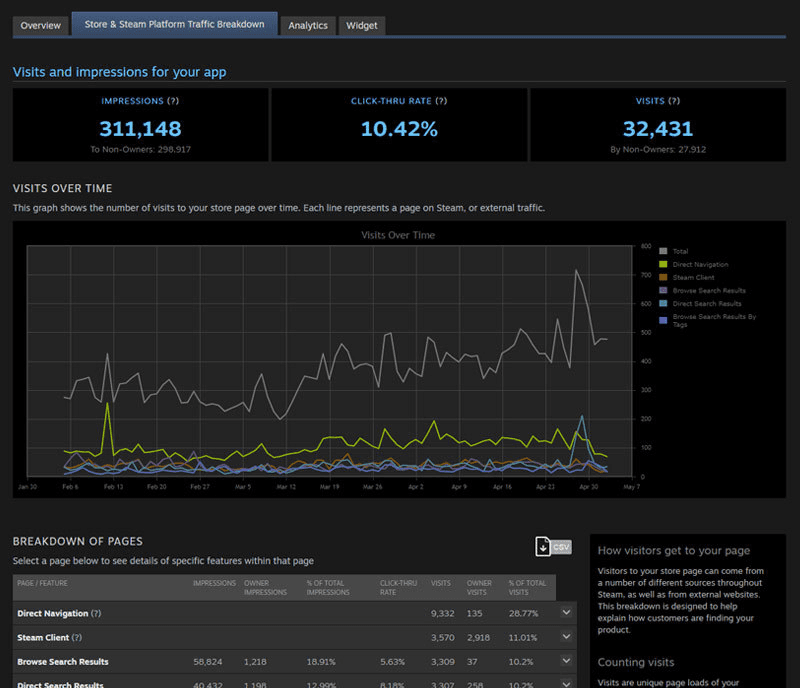
Strategies for improving asset performance
Different page elements have different leverage. Roughly in order of importance:
1. Pre-landing page
What players see when Steam surfaces your game elsewhere (e.g. New Releases).

| Item | Why it matters | How to optimize |
|---|---|---|
| Capsule art | Drives the first click across discovery, search, festivals, and recommendations. | Keep it simple: title + one key visual, legible at thumbnail size. Genre, tone, and quality must be obvious at a glance. Avoid clutter or unsupported marketing text. |
| Title | Affects memorability, searchability, first impression. | Distinct, easy to spell and search, tonally aligned. Avoid generic or confusing names. |
2. Above the fold
Everything immediately visible without scrolling.
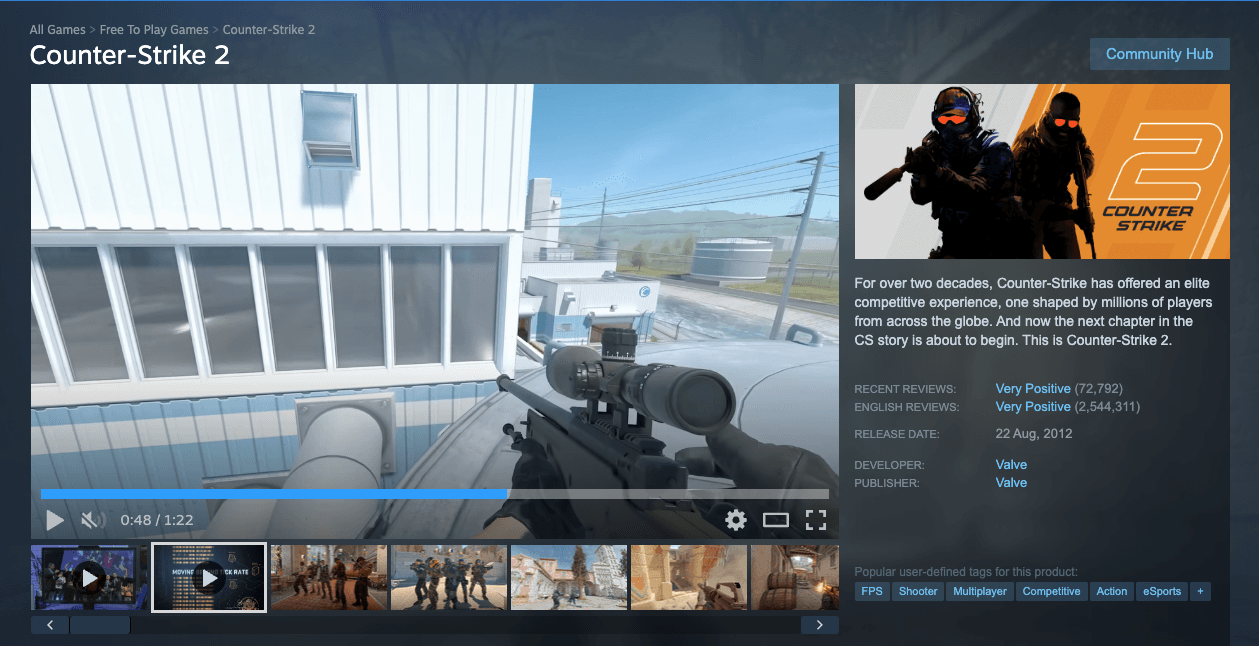
| Item | Why it matters | How to optimize |
|---|---|---|
| Trailer | Showcases the attributes your target player cares about. | Not a movie, open with 30–45 seconds of core, fun gameplay, not cinematics. Release new trailers at milestones to renew interest. |
| Tags | Help Steam recommend the game and place it in the right genre. | Use all 20 tags. The top 5 weigh most, so make them accurate and specific to attract your target player. |
| Short description | Quickly tells players what the game is; appears in high-visibility areas. | State genre, core action, and differentiator in plain language. Keep it concise and free of vague hype. |
| Carousel screenshots | The images beside your trailer at the top of the page. | You've shown your best hooks in the trailer; here, showcase depth of content and visual diversity. |
3. Below the fold
Everything a player has to scroll to see.
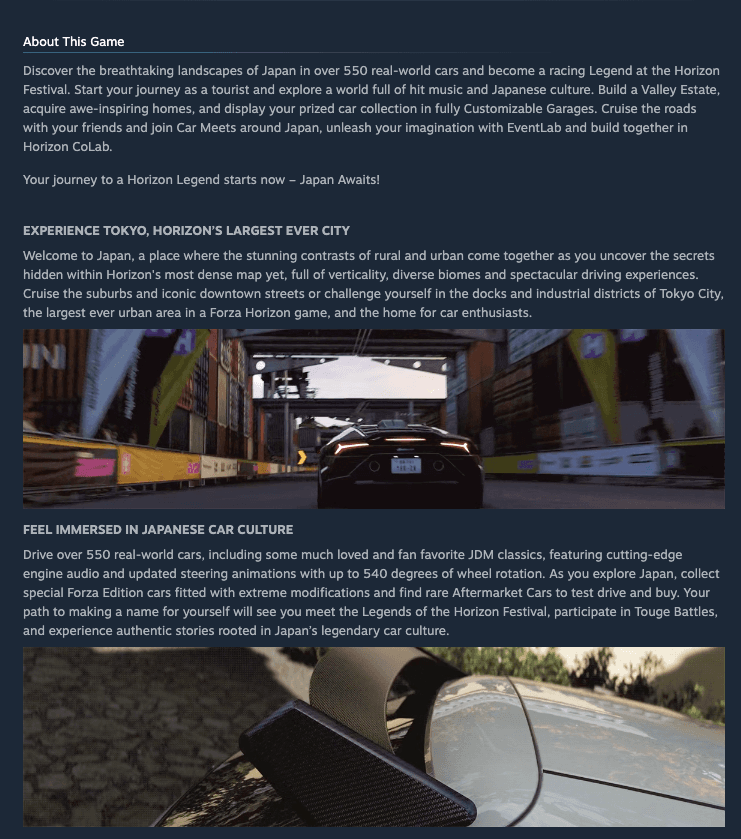
| Item | Why it matters | How to optimize |
|---|---|---|
| In-text screenshots / GIFs | A visual hook within the page that quickly shows what the game is. | Lead with the visuals that performed best in your messaging tests. GIFs work well, a fast way to convey the trailer for people in a rush. |
| About this game | A longer description of features. Most players skim it. | Structure for skimming: headers, short sections, feature bullets, and explain the deeper appeal. |
Step 10: Launch day
Launch day is interesting:
- Due to Steam's momentum-based algorithm, lifetime sales are highly correlated with the sale rate in the first 48 hours. Launch day is a big deal.
- Yet the single biggest factor in Day 1 sales isn't what you do on Day 1, it's the number of engaged wishlists accumulated over the prior months.
Your game's lifetime success is based on the work you do months before launch. Launch day is just the final leg of the sprint to get Steam's algorithm amplifying your visibility.
Spike wishlist velocity
Immediately after launch, aim for the New & Trending page, which is based on:
| Total sales | Rule of thumb: ~$8,000 in sales to be featured. |
| Sales velocity | You need to accumulate those sales rapidly in the first 48 hrs. |
Main strategies:
- Launch a new trailer, give existing fans a reason to pay attention and spread it to non-wishlisters.
- Use scarcity, apply a 10–20% discount for the first 48 hours. It cuts per-player profit, but spiking sales volume matters more here.
- Increase top of funnel, remind socials, activate friendly streamers, send a final PR round, and spike proven paid spend.
- External bottom of funnel, don't rely on Steam's single wishlister email. Use a tool like Immutable Engage to contact wishlisters at multiple stages leading up to launch.
- Get reviews, reaching 10 reviews is critical. Below that, Steam shows "No user reviews, " which reads as "nobody has played this." Add a review CTA to your external marketing, especially in community channels like Discord.
Conclusion
There's no single launch hack that works for every game, and marketing keeps changing. But the fundamentals hold: build a great game, find repeatable channels that build your audience pre-launch, and do more of the content that works. Your game's lifetime success is mostly decided in the months before launch.

Robbie Ferguson, Co-Founder & President at Immutable
See what your launch numbers could look like
We built Immutable to help studios maximize pre-launch momentum and convert wishlists into Day 1 players, including a proven 2.8x lift in launch-day conversion for studios as large as Ubisoft. Read the Ubisoft case study or book a call.
Book a demo